News

: William Milner wins this year's GPMFC Student Poster Prize at DAMOP
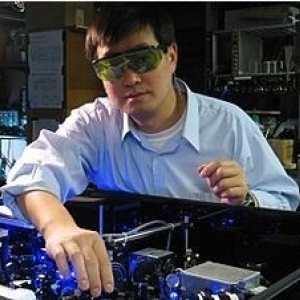
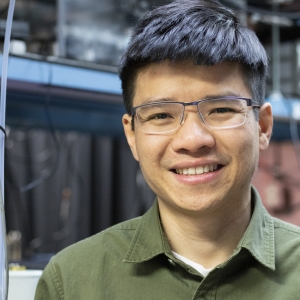
Photo of William Milner

This year's winner of the Group for Precision Measurement and Fundamental Constants (GPMFC) Student Poster Prize is JILA student William Milner.  Milner's poster prize was won at DAMOP, which is a part of the American Physics Society (APS) and stands for Division of Atomic, Molecular & Optical Physics.  The title of his poster was "Exploring interactions in the band insulating regime with Fermi-degenerate 87 Sr".  Congratulations Will!

: Jun Ye Highlighted as one of the Department of Commerce's AANHPI Pioneers
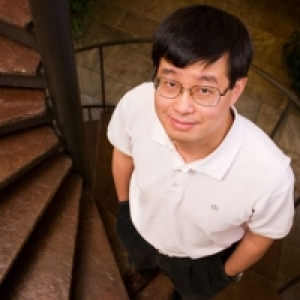
Photo of Jun Ye

The Department of Commerce is proud to join the Nation in recognizing the Asian American, Native Hawaiian, and Pacific Islander (AANHPI) Heritage Month, also known as Asian American Pacific Islander (AAPI) Heritage Month. Observed annually in May, AANHPI Heritage Month is a time to reflect upon and celebrate the remarkable role of the AANHPI community in our Nation’s history. It also is a time to recognize all the many contributions and achievements within the AAHNPI community that have had a positive impact on our Nation. 

: Jun Ye wins the 2021 Julius Springer Prize
photo of Jun Ye

The 2021 Julius Springer Award for Applied Physics is awarded to Professor Jun Ye for pioneering research in fundamental quantum interactions of elemental matter and light, exploiting precision optical spectroscopy and laser-lattice atomic traps.

: Can the Denver, Boulder area be an epicenter for the next great tech boom?
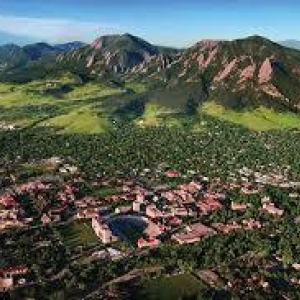
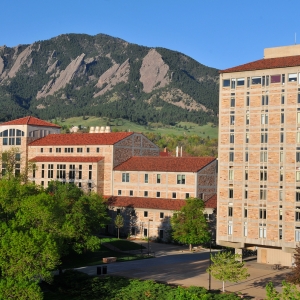
Photo of CU Campus

A recent article in the Denver Post highlights a possible technology boom happening right here in the Denver and Boulder area. 

: Jun Ye Interviewed by Buff Innovator Insights Podcast
Logo of Buff Innovator Insights Podcast

JILA Fellow Jun Ye is interviewed for the Buff Innovator Insights Podcast hosted by the CU Boulder Research & Innovation Office. 

: Jun Ye wins 2020 Micius Quantum Prize
Thumbnail

The Micius Quantum Prize recognizes significant scientific advances ranging from the early conceptual contributions to the recent experimental breakthroughs. The Micius Quantum Prize 2020 focuses on the broadly defined field of quantum metrology, recognizing scientific advances ranging from early conceptual contributions to experimental breakthroughs. The laureates this year are Carlton Caves, Hidetoshi Katori, and Jun Ye.

: OSTP Quantum Division Highlights Q-SEnSE Leadership in Quantum Sensing
Q-SEnSE logo

Led by CU Boulder and designed to push the frontiers of quantum sensing, Quantum Systems through Entangled Science and Engineering (Q-SEnSE) involves 37 researchers from 11 institutes located in 6 different states (and one collaborating from Europe). 

: Jun Ye named 2020 Highly Cited Researcher
Jun Ye

JILA fellow Jun Ye has been named Highly Cited Researcher for 2020 by Clarivate Analytics. Ye has been awarded the Highly Cited Researcher in the field of physics every year since 2014.

: JILA’s Jun Ye named to National Quantum Initiative Advisory Committee
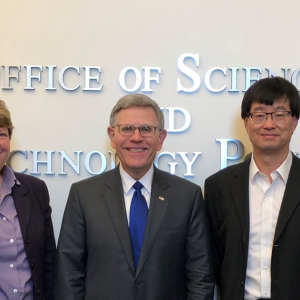
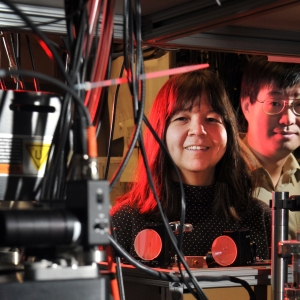
Dr. Jun Ye meets with the Office of Science and Technology in DC

Quantum science has the potential to further revolution technology in several fields, from computing to communication. As a world-renowned leader in the field, JILA Fellow Jun Ye will advise U.S. leaders on ways to bring these advances out of the lab and into real-world applications.

: New $115 Million Quantum Systems Accelerator to Pioneer Quantum Technologies for Discovery Science
JILA building

A new national quantum research center draws on JILA Fellows' and their expertise to make the United States an international leader in quantum technology.

: Jun Ye to Lead New $25 Million Quantum Science and Engineering Institute
Thumbnail

JILA Fellow Jun Ye will head new science and engineering institute to bring quantum discoveries out of the lab and into real-world applications.

: JILA Helps Design Alarms for Ventilators in the COVID-19 Pandemic
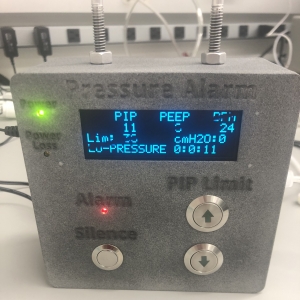
CZ Biohub ventilator alarm

In the midst of a global pandemic, researchers and engineers find partnerships in unexpected places.

: Fellows Jun Ye and Deborah Jin named Most Highly Cited Researchers for 2019
Thumbnail

JILA Fellows Deborah Jin and Jun Ye were named Most Highly Cited Researchers by Clarivate Analytics for 2019.

: JILA team demonstrates model system for distribution of more accurate time signals
PRL Time Scale

With a super-steady laser, JILA has improved the way we keep time around the world. 

: Former JILA research associate wins 2019 Packard Fellowship
Shimon Kolkowitz, former JILA research associate in the Ye group, won the 2019 Packard Fellowship

Shimon Kolkowitz, a former JILA research associate, won the 2019 Packard Fellowship.

: JILA postdoctoral researcher Marissa Weichman wins poster prize
Dr. Marissa Weichman and her prize-winning poster

NIST NRC postdoctoral fellow in the Ye Group won the poster competition at a recent conference.

: Thinh Bui wins Longuet-Higgins Early Career Researcher Prize
portrait of Thinh Bui postdoc

Thinh Bui, a postdoctoral researcher in Jun Ye's group, won an early career prize from the journal Molecular Physics.

: CUBit meets with Congress
Dr. Jun Ye meets with the Office of Science and Technology in DC

Delegates from the University of Colorado Boulder went to Washington, D.C. to discuss the CUBit Quantum Initiative.

: Marit Fiechter wins SPIN prize for best undergraduate physics thesis
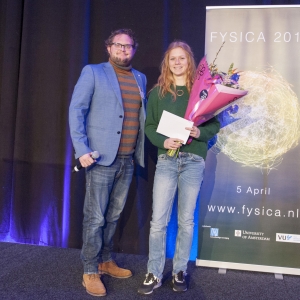
Marit Fiechter with NNV Chair Diederik Jekel

Marit Fiechter, an undergraduate at the University of Groningen and former JILA student, won the SPIN prize for best undergraduate thesis project.

: Anna McAuliffe wins APS CUWiP Poster Award
Photograph of Anna McCauliffe

CU Boulder student and JILA undergraduate researcher Anna McAuliffe won the poster competition at the 2019 Conference for Undergraduate Women in Physics held at Utah State University.

McAuliffe’s poster detailed the build and installation of a cryogenic hexapole designed to mitigate clog issues in an OH decelerator. This work was the latest effort of researchers working under JILA Fellow Jun Ye to increase the density of the molecular beam.