

Lannig Stefan
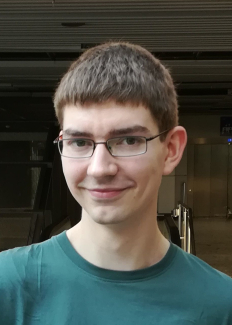
Dr. Stefan Lannig
I am a postdoc on the 87Sr 3D lattice clock focused on investigating quantum many-body physics by applying precision spectroscopy on the clock transition. Among other topics, we're currently focused on superexchange and radiative dipole interactions with the goal of understanding general dephasing mechanisms, investigating collective effects and implementing metrologically useful squeezing.
Before coming to JILA I did research on the non-equilibrium behavior and non-linear physics in a spinor BEC of 87Rb in the Oberthaler group in Heidelberg.
Email
stefan.lannig@jila.colorado.edu
 The Physics Frontiers Centers (PFC) program supports university-based centers and institutes where the collective efforts of a larger group of individuals can enable transformational advances in the most promising research areas. The program is designed to foster major breakthroughs at the intellectual frontiers of physics by providing needed resources such as combinations of talents, skills, disciplines, and/or specialized infrastructure, not usually available to individual investigators or small groups, in an environment in which the collective efforts of the larger group can be shown to be seminal to promoting significant progress in the science and the education of students. PFCs also include creative, substantive activities aimed at enhancing education, broadening participation of traditionally underrepresented groups, and outreach to the scientific community and general public.