

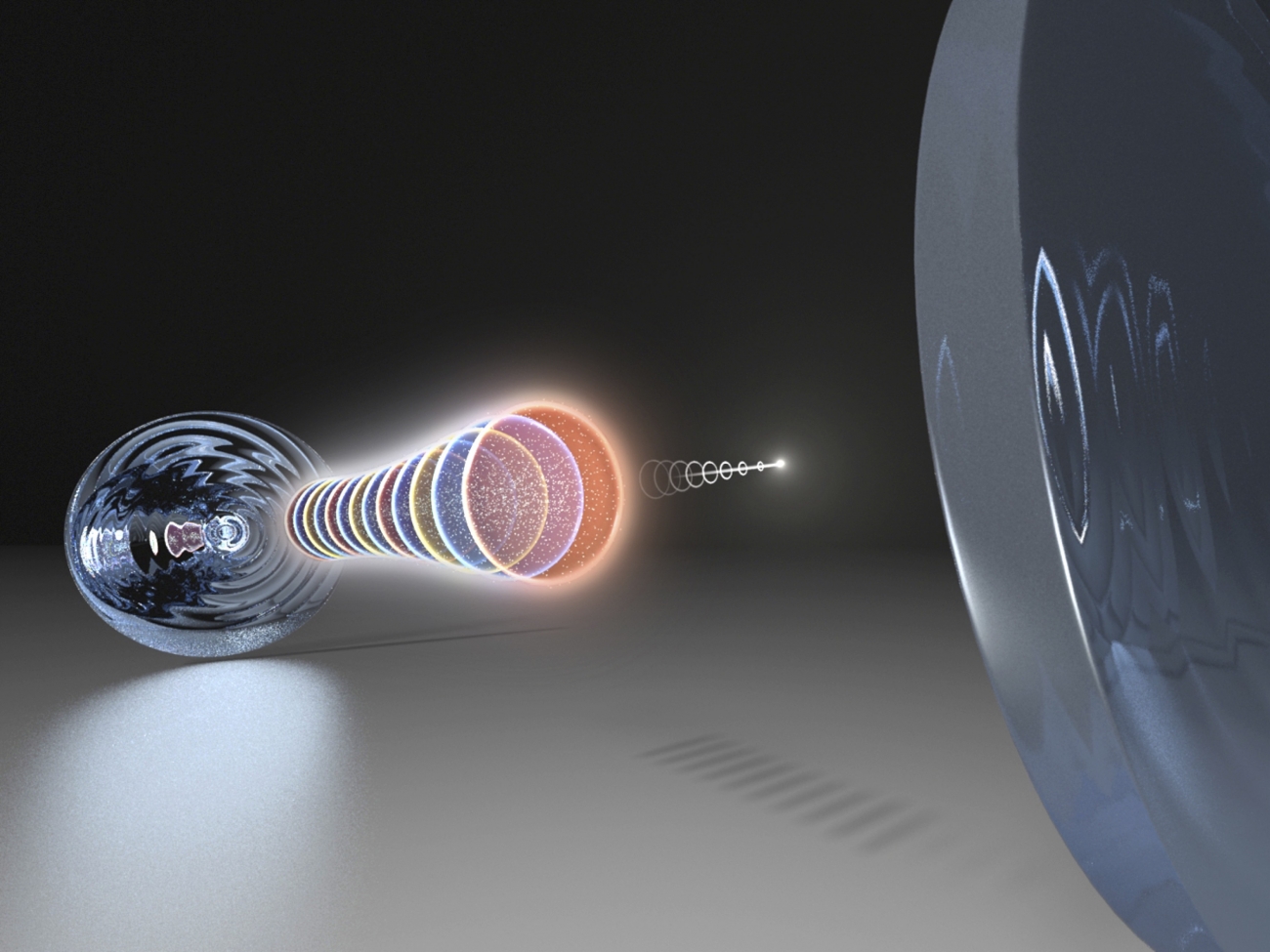
milliHertz Linewidth Continuous Superradiant Laser
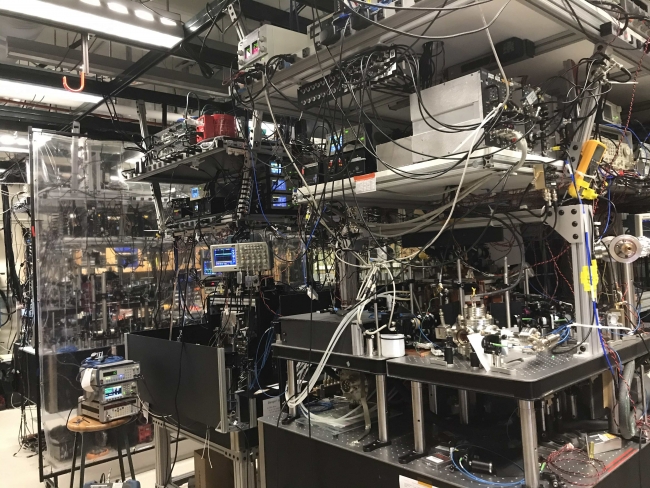
We are working to realize an ultra-low noise laser in which the phase information of the laser is hidden in a collective state of strontium atoms that are laser cooled and trapped inside of a high finesse optical cavity. In previous work, we were able to observe pulses of superradiantly emitted light from the long-lived milliHertz strontium clock transition. The center frequency of the pulses of light was nearly a million times less sensitive to cavity noise than traditional approaches and had a fractional frequency stability of 7 x 10-16. This first-of-its-kind pulsed laser has inspired us to develop a continuous with a quantum-limited linewidth of a milliHertz or less. Such a laser that would enable next-generation searches for dark matter, geodesy based on general relativity, and atomic clocks.
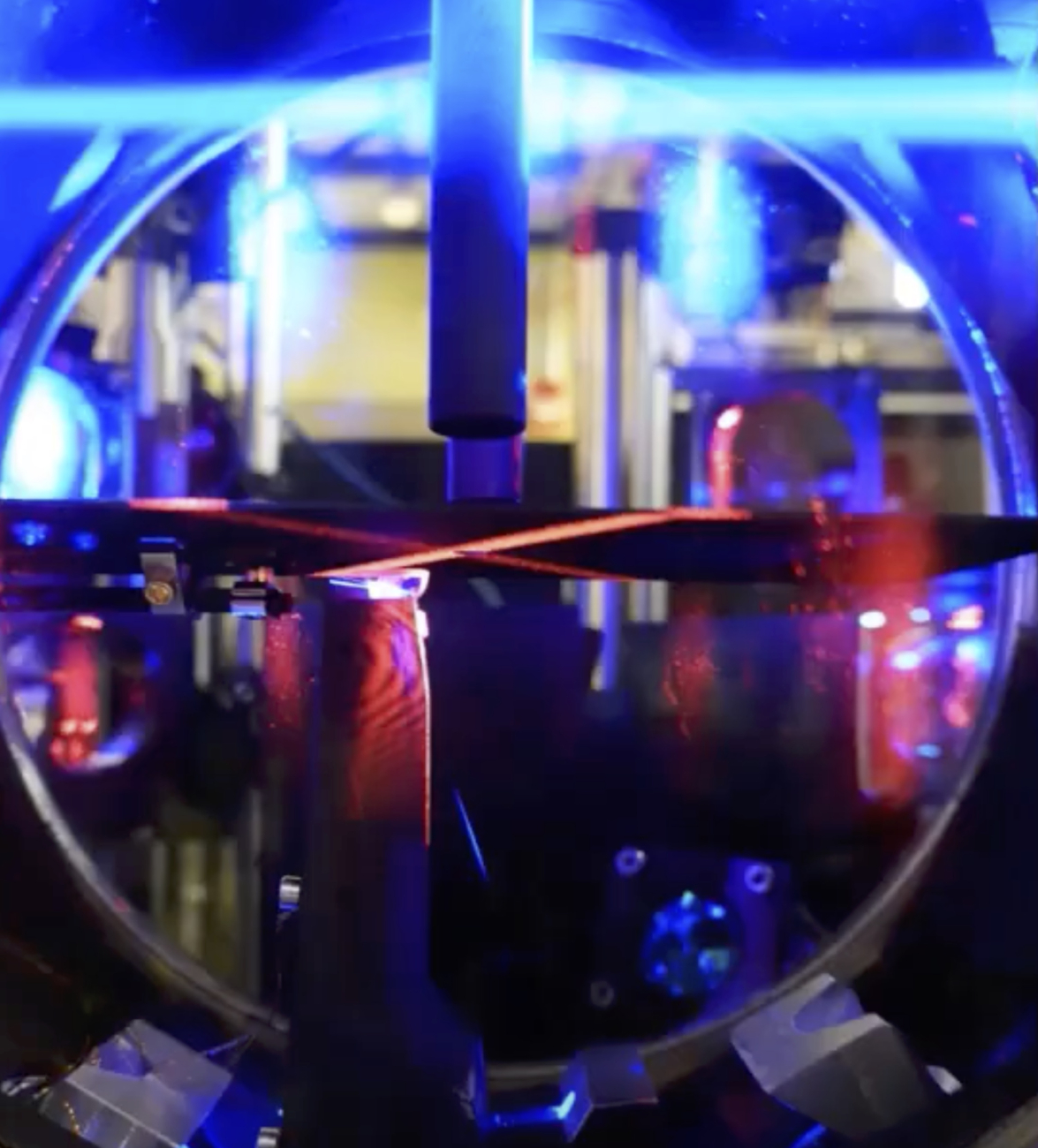
Strontium Ring Cavity System
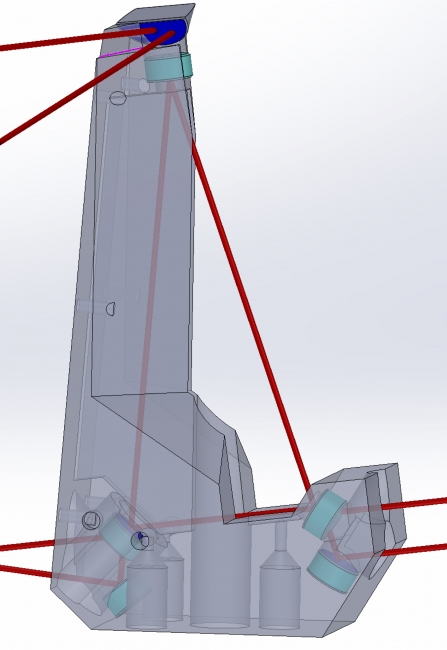
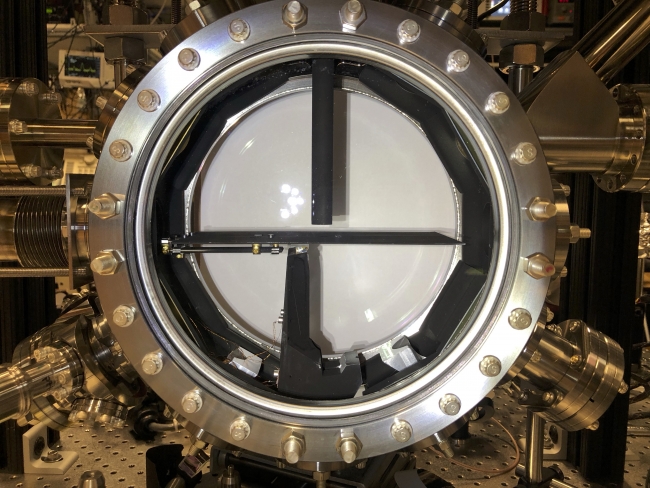
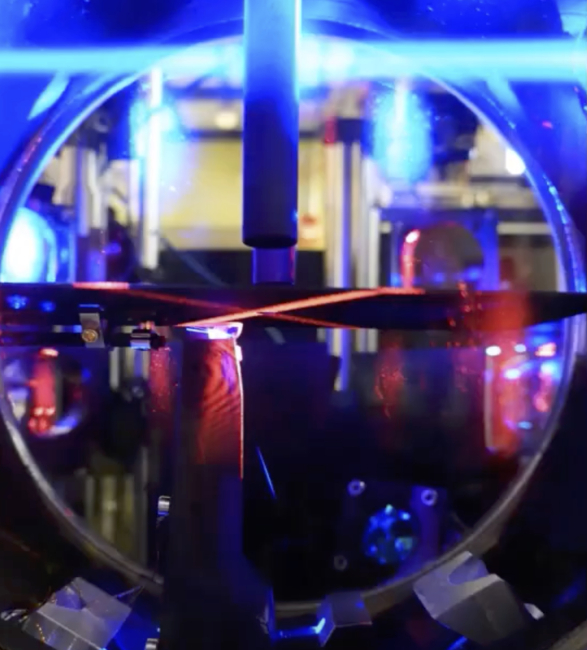
We have successfully built a ring cavity in which atoms can be loaded in one region and then transported in a light conveyor belt to a region where the atoms will undergo superradiant lasing. If successful, we believe fractional frequency stabilities at or below 5 x 10-18 at one second may be obtainable.
 The Physics Frontiers Centers (PFC) program supports university-based centers and institutes where the collective efforts of a larger group of individuals can enable transformational advances in the most promising research areas. The program is designed to foster major breakthroughs at the intellectual frontiers of physics by providing needed resources such as combinations of talents, skills, disciplines, and/or specialized infrastructure, not usually available to individual investigators or small groups, in an environment in which the collective efforts of the larger group can be shown to be seminal to promoting significant progress in the science and the education of students. PFCs also include creative, substantive activities aimed at enhancing education, broadening participation of traditionally underrepresented groups, and outreach to the scientific community and general public.