

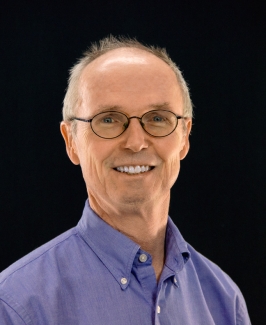
Nesbitt
Research Interests
Professor Nesbitt is interested in laser spectroscopy, dynamics, and kinetics of fundamental molecular, bio-molecular, and nanoparticle systems, studied at either the quantum state-to-state or single molecule level.
Background
BA Chemistry and Physics, Harvard University, 1975; Teacher (math, physics, and chemistry), Colorado Academy, Denver, 1975-77; PhD, Chemical Physics, University of Colorado at Boulder, 1981; National Research Council Postdoctoral Fellow, National Bureau of Standards, 1981-82; Miller Fellow, University of California, Berkeley, 1982-84; American Chemical Society Nobel Laureate Signature Award, 1983 (with S. R. Leone and J. T. Hynes); Dreyfus Foundation Grant for Newly Appointed Faculty in Chemistry, 1984; Alfred P. Sloan Fellow, 1987; Wilson Prize Lecture, 1989; American Physical Society Fellow, 1991; Arthur S. Fleming Award for Government Service, 1991; Department of Commerce Silver Medal, 1992; Edward Uhler Condon Award (National Institute for Standards and Technology), 1995; Earle K. Plyler Prize (American Physical Society) 1997; William F. Meggers Award (Optical Society of America), 1999; Alexander von Humboldt Fellowship, 1999-present; Alexander von Humboldt Senior Scientist Award, 1999; Bourke Medal, Royal Society of Chemistry, Faraday Division, 2002; Senior Fellow, National Institute of Standards and Technology, 2005-present; Fellow of the Royal Society of Chemistry (UK), 2005; Presidential Rank Award, 2009; Fellow of the American Chemistry Society, 2010-present; Fellow of JILA.
 The Physics Frontiers Centers (PFC) program supports university-based centers and institutes where the collective efforts of a larger group of individuals can enable transformational advances in the most promising research areas. The program is designed to foster major breakthroughs at the intellectual frontiers of physics by providing needed resources such as combinations of talents, skills, disciplines, and/or specialized infrastructure, not usually available to individual investigators or small groups, in an environment in which the collective efforts of the larger group can be shown to be seminal to promoting significant progress in the science and the education of students. PFCs also include creative, substantive activities aimed at enhancing education, broadening participation of traditionally underrepresented groups, and outreach to the scientific community and general public.